Content Gaps
Questions you are relevant for but not yet named in, why, and the brief to win them.
Site index for AI agents: /llms.txt. Documentation pages under /docs are also served as markdown at the same URL plus .md (e.g. /docs/geo-audit.md) or via an Accept: text/markdown request.

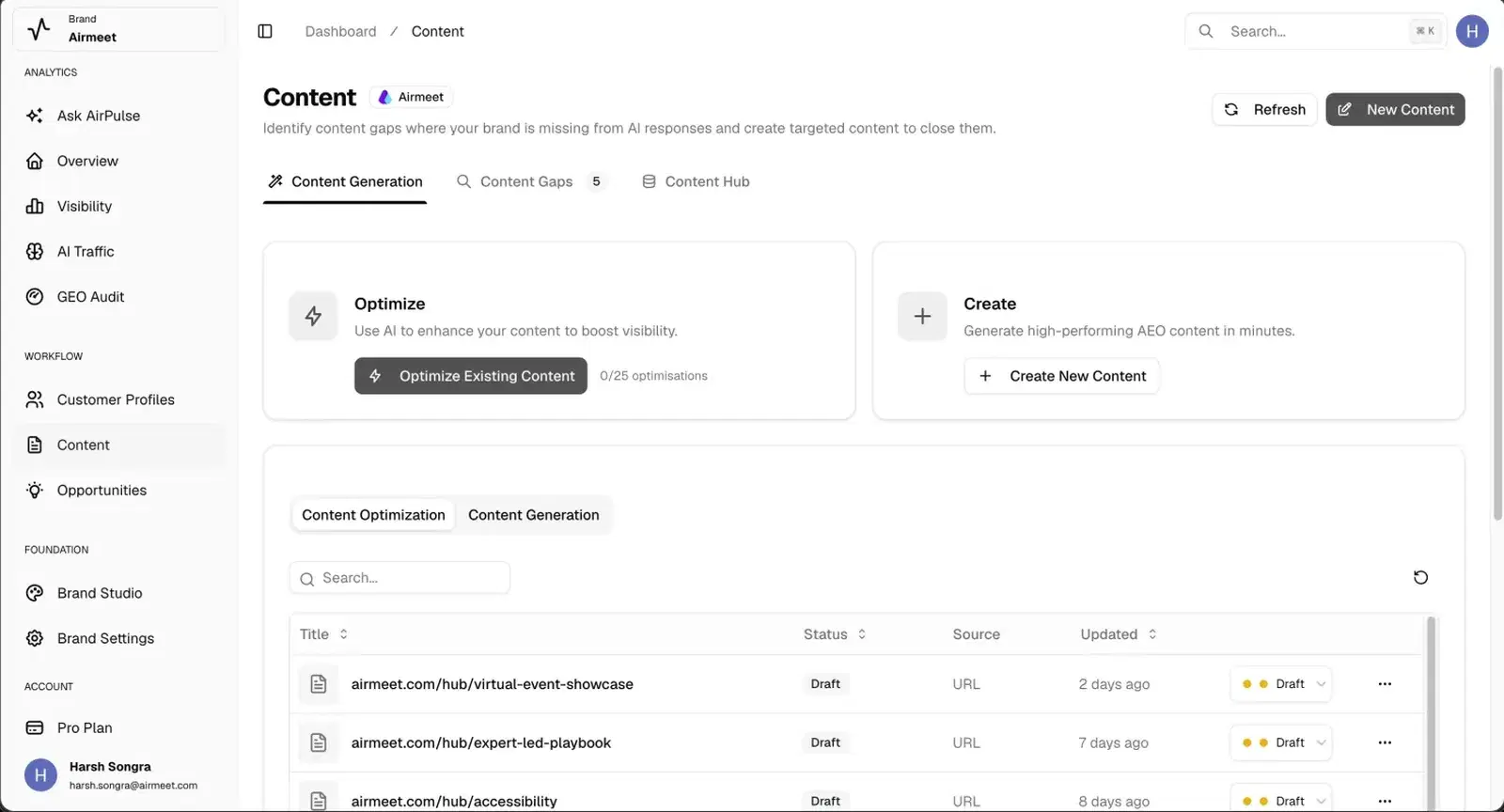
Turn a brief into a structured draft, then score answer-readiness, entity coverage and citation potential before it publishes.
Engines extract answers. They reward a page that states its claim early, defines its entities, cites a source and separates its questions into blocks. They skip a page that buries its point four paragraphs deep.
Traditional briefs specify a keyword, a word count and a tone, and leave the writer to guess at entities, proof, structure and sources.
Nothing publishes without your approval, and the score is advice rather than a verdict. A high-scoring draft that says nothing new will not get cited, because engines reward the specific and skip the generic.
Start from the openings. The free audit shows which answers you can win today.