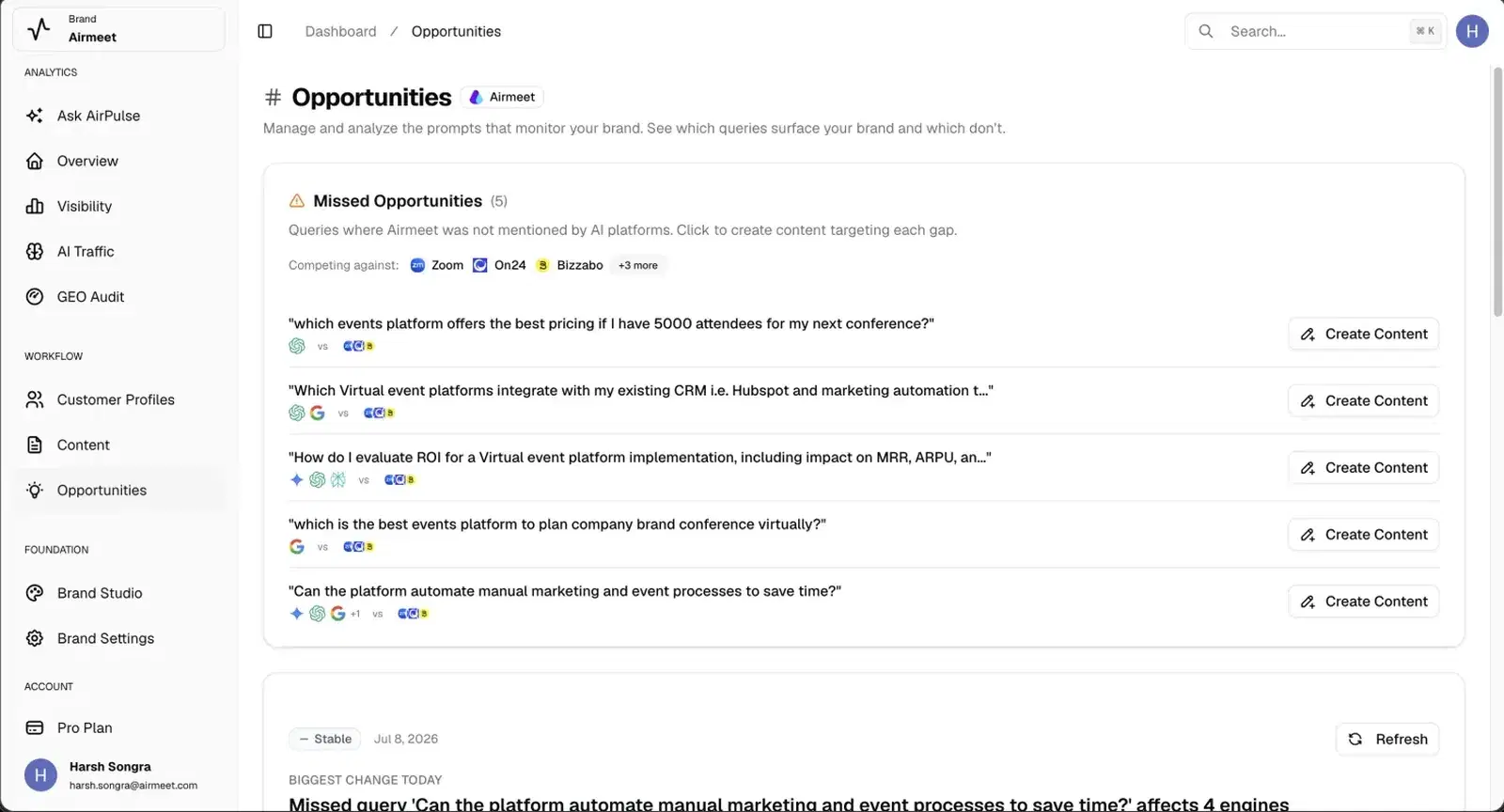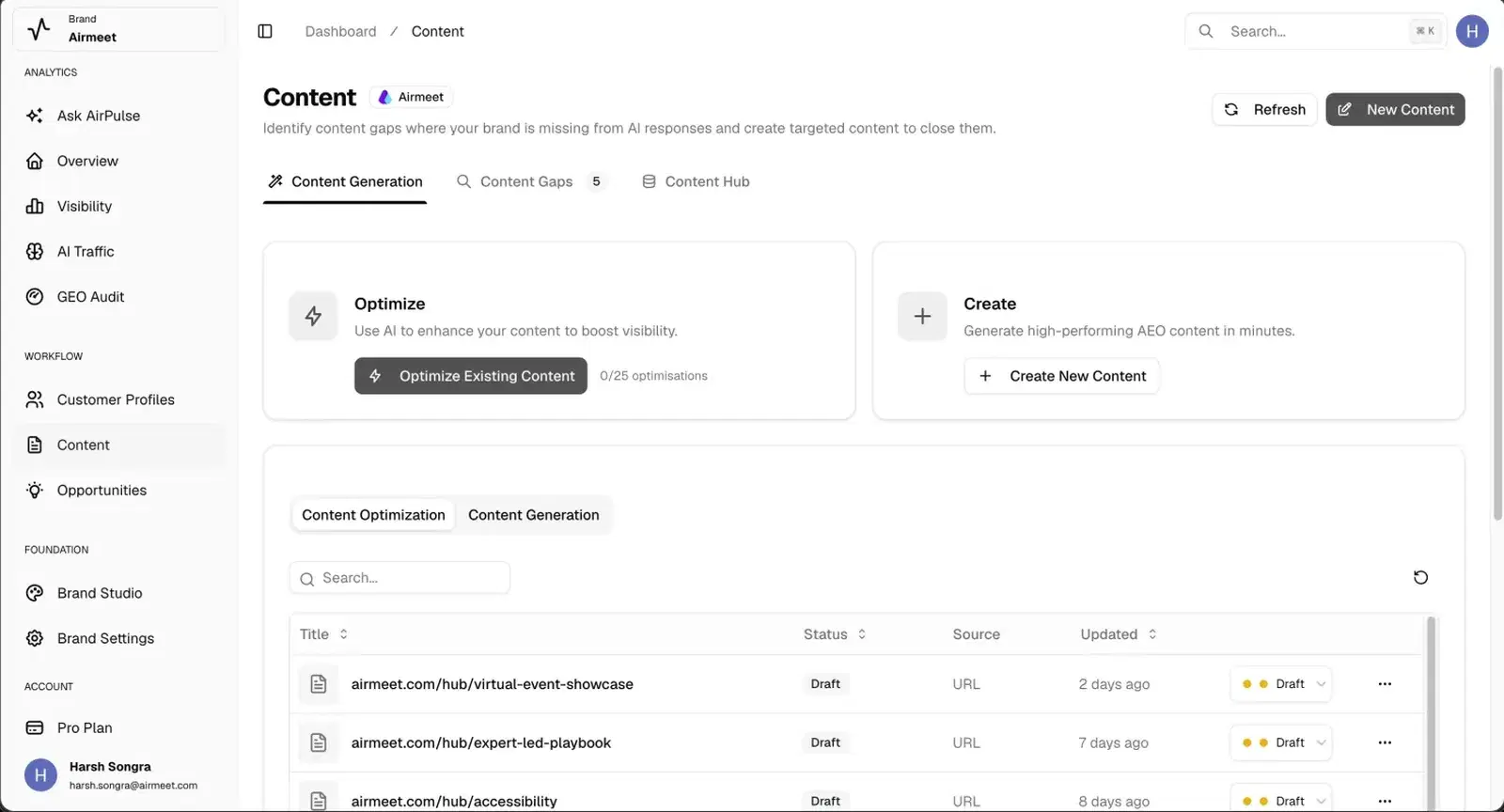
Measure
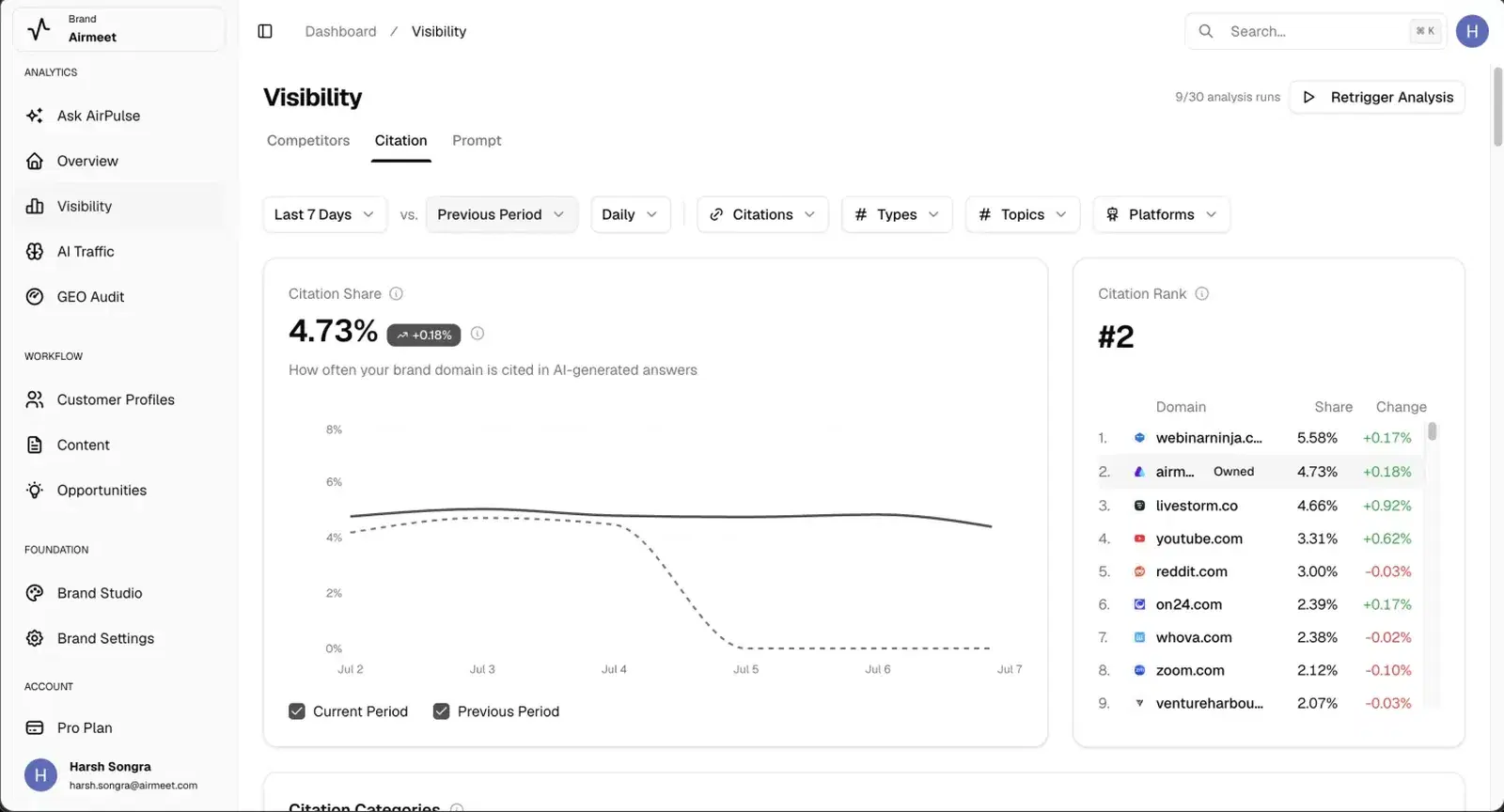
Visibility
Score by engine, competitor heatmap, citation share and AI traffic, tracked daily on the prompts your buyers ask.
Site index for AI agents: /llms.txt. Documentation pages under /docs are also served as markdown at the same URL plus .md (e.g. /docs/geo-audit.md) or via an Accept: text/markdown request.

Answer engines send visitors without a referrer, so the channel hides in direct. AirPulse separates it by engine and page.
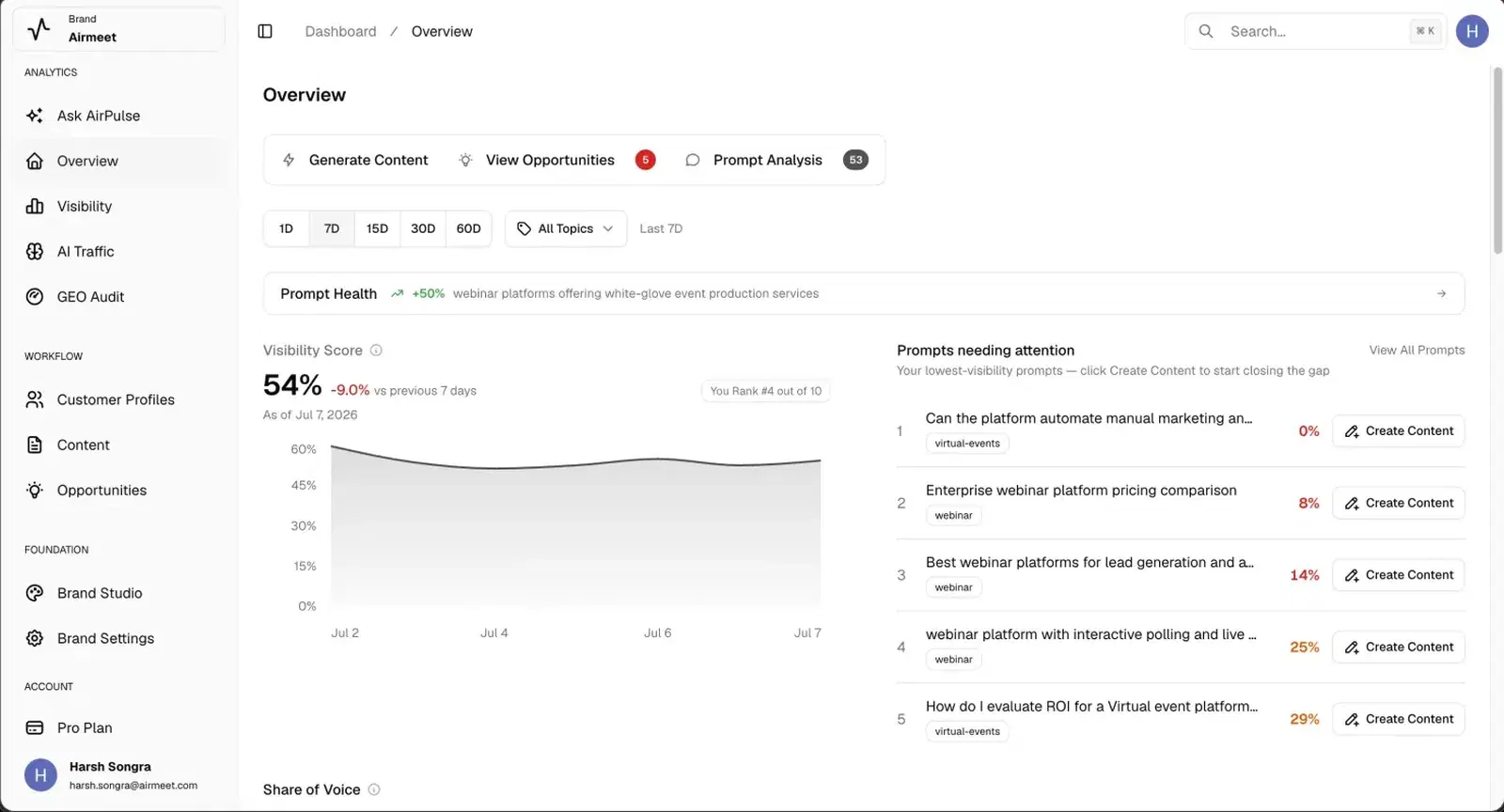
Referrals from ChatGPT, Perplexity, Gemini, Copilot and Google AI, pulled out of the direct bucket. Sessions, trend and share of total.
Which engines send people, and in what mix. The engine that cites you most is rarely the one that sends the most traffic.
The pages engines send people to, which tells you where to put the demo CTA.
Time on page, pages per session and bounce for AI visitors against the rest of your traffic.
An engine can cite you, answer the buyer's question completely, and send nobody. No traffic report will show it. Read AI Traffic next to visibility, never instead of it.
A walkthrough on your own analytics: engines, landing pages and visit quality.