Prompt Analysis
Discover and cluster the prompts buyers ask, then turn them into briefs.
Site index for AI agents: /llms.txt. Documentation pages under /docs are also served as markdown at the same URL plus .md (e.g. /docs/geo-audit.md) or via an Accept: text/markdown request.

See where each engine names, ranks and cites you for the prompts buyers type, and how that moves.
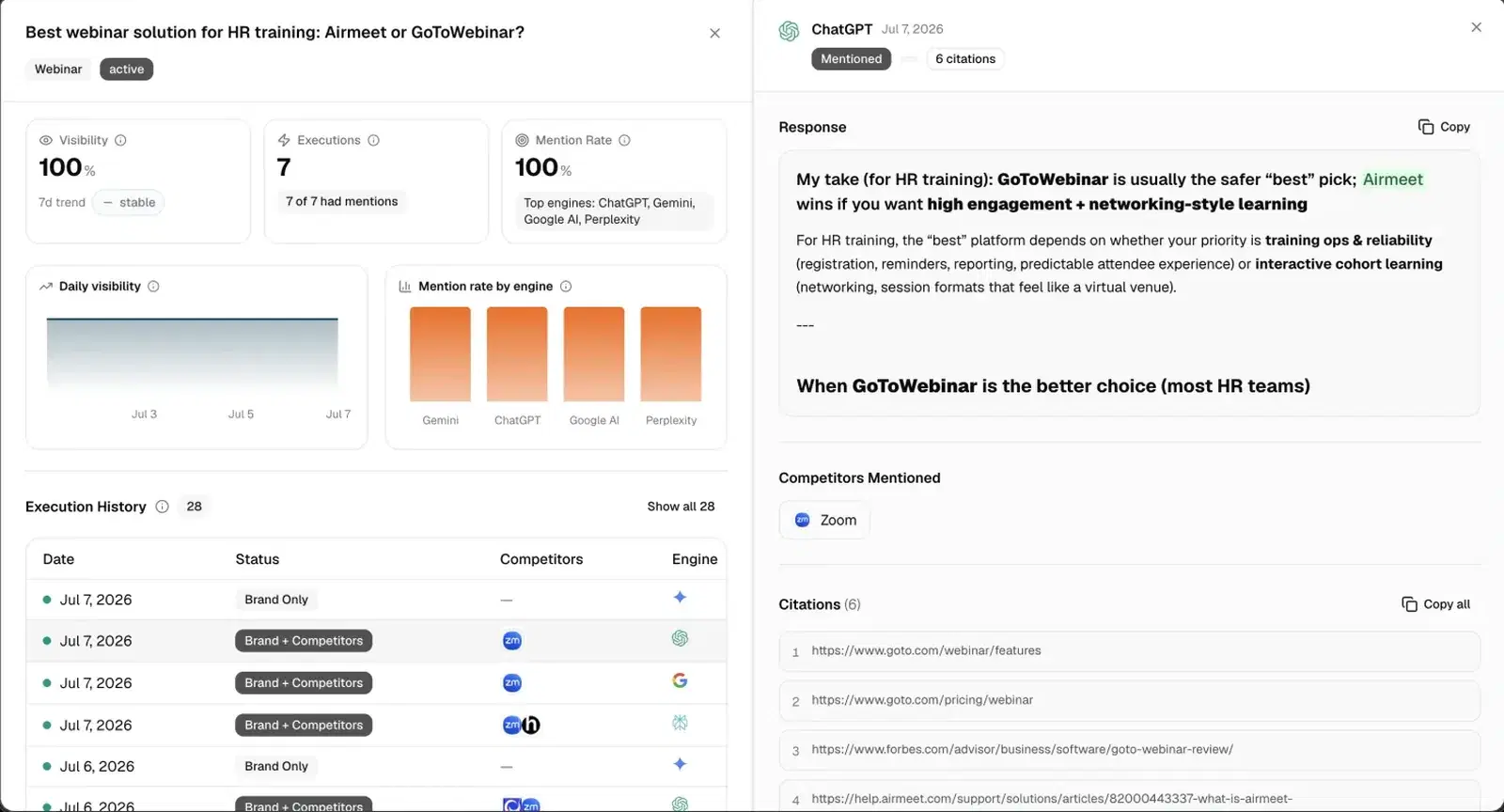
Ask two engines the same question about your category and you get two different shortlists. Ask again next month and both have changed. Checking by hand does not scale past a dozen prompts and tells you nothing about movement.
Answer engines are non-deterministic: ask the same prompt twice and the wording, and sometimes the shortlist, will differ. The product reports trends across repeated runs, and a one-week movement on a single prompt is not evidence of anything.
AirPulse's frozen 30,504-response study found that mention status flipped between consecutive observations about one time in ten.
See the 30,504-response study and recommended run countsThe free audit runs your buyers' real questions against four engines and shows which brands each answer names.